A Complete List of Executive Functioning IEP Goals for ADHD
When most people think about ADHD in the classroom, they picture the visible behaviors first. The loud ones, the ones that feel hard to deal with and a little overwhelming.
You may find your students have difficulty focusing, they may blurt out answers, have difficulty finishing work, show impulsive behaviors, or are constantly moving.
But ADHD is so much bigger than “not paying attention.”

OVERLOADED caseload? No idea how you are going to manage it all? This Summit is for you.

calling all SPED Teachers
OVERLOADED caseload? No idea how you are going to manage it all? This Summit is for you.
Attention-Deficit/Hyperactivity Disorder (ADHD) is a neurodevelopmental disorder that affects a student’s executive functioning skills. These skills are responsible for planning, organization, emotional control, working memory, time management skills, and self-regulation skills.
That’s why so many students with ADHD struggle in ways that can be really misunderstood.
A student might completely understand the lesson but still forget homework assignments, lose their materials, struggle to complete tasks independently, or become overwhelmed by larger projects. While another student may seem oppositional when, in reality, they’re experiencing executive functioning challenges that make starting or organizing tasks feel neurologically overwhelming.

Just like with many other disabilities, ADHD is not a one-size fits all. Which is exactly why we need really strong, supportive, and effective IEP goals.
The best executive functioning IEP goals are not created to simply make students more compliant in the school setting. Rather, they focus on building foundational executive function skills that support long-term academic success, social skills, independence, and personal success.
Executive functioning skills are life skills and the more we can embed teaching them in our classrooms to all students, the greater success they’ll have long-term.
Diving Deeper Into Executive Functioning
Executive functioning refers to the brain-based executive skills that help students:
- plan ahead
- organize materials
- regulate emotions
- prioritize tasks
- manage time
- sustain attention
- remember information
- shift between activities
- monitor their own behavior
- complete assignments
The skills above play an important role in every part of the school day. And without these skills, students can’t thrive in the school setting.
You may notice students with poor executive functioning skills struggle to:
- follow multi-step directions
- manage a daily schedule
- organize materials
- complete classroom tasks
- regulate emotions during social situations
- complete assignments on time
- transition between activities
- manage the amount of time needed for tasks

For many special education students, these struggles significantly impact academic performance and academic achievement, even when they are intellectually capable. I’ve seen so many bright, talented students who simply didn’t hand in homework that was completed or forget about a deadline for an experience they were looking forward to, all because they lacked the fundamental skill to follow through on these tasks.
Why Students With ADHD May Need an IEP
Not every child with ADHD requires special education services. But, some students need an individualized education plan (IEP) when ADHD significantly impacts their ability to do well in school.
The education team evaluates the student’s needs, current academic goal areas, executive functioning challenges, social interactions, emotional regulation, and overall student’s progress.
The goal of student’s individualized education plans should not simply be behavior management. Although we want to support all students in behaving well in school and learning the regulation skills needed to do that, we really want to zoom out for our students, as well.
One of the best ways to support students with ADHD is to avoid focusing too heavily on compliance-based goals like:
- “stay seated”
- “stop fidgeting”
- “stop interrupting”
Impulse control and classroom expectations matter, but behavior-only goals don’t address the underlying executive functioning deficits that cause the student struggle in the first place.
A student may interrupt because of poor impulse control and they may avoid work because task initiation feels overwhelming. A student may shut down because emotional control and self-regulation strategies are still developing.
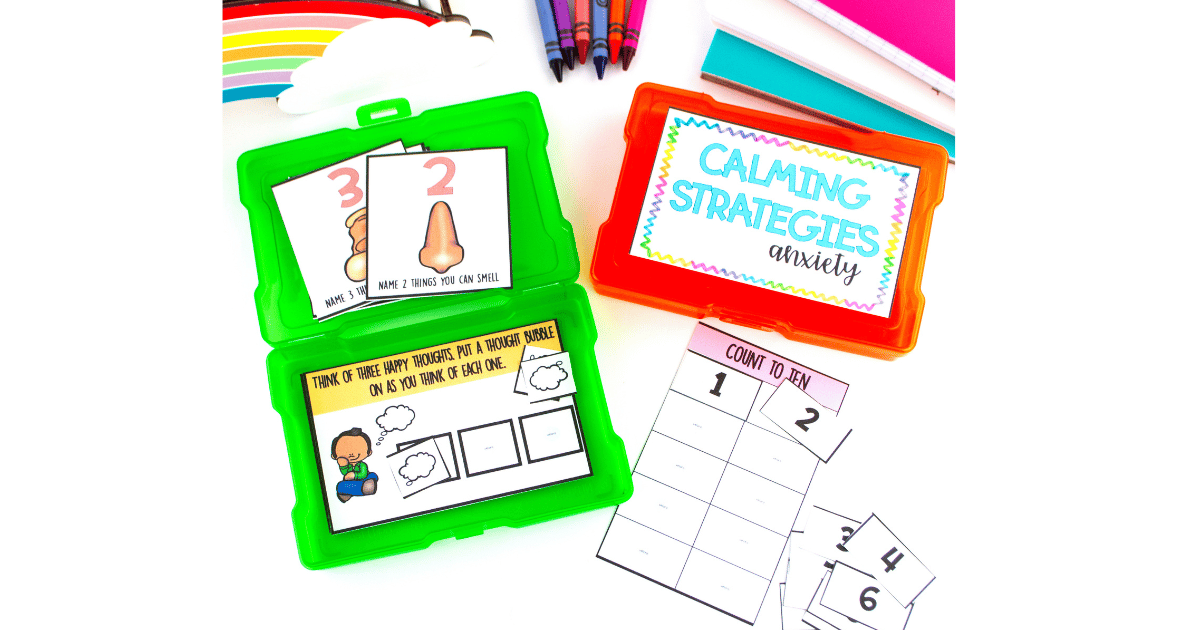
This is why effective executive functioning IEP goals focus on skill building and not just consequences or behavior-first goals.
What Makes Effective Executive Functioning IEP Goals?
It’s important for the goals we present to be measurable and available for actively pursuing in the classroom environment.
Strong measurable IEP goals should be:
- observable
- realistic
- skill-based
- data driven
- connected to daily functioning
The best measurable goals are clear and tell you:
- the skill being targeted
- the supports being used
- how data collection will occur
- what successful progress looks like
Someone completely new to the student should be able to pick up their IEP and begin implementing the goal immediately without a lot of questioning or confusion.
A weak goal would be something like this:
Student will improve organization skills.
A stronger goal would be written as follows:
Given visual supports and organizers, the student will independently organize classroom materials in their desk, prior to the end of the school day, in 4 out of 5 opportunities as measured through teacher observation and data collection.
Can you see the difference? The second goal gives you:
- specific objectives
- measurable outcomes
- actionable supports
- a clear method for monitoring student’s progress
This is so important during IEP meetings because measurable IEP goals help everyone on the team understand exactly how growth will be monitored from the beginning of the school year through the end of the IEP cycle.
Executive Functioning IEP Goals for ADHD
Below you’ll find an executive functioning IEP goal bank and examples to guide you while creating education plans for students with ADHD.
Any goal bank should always be used as a jumping off point and individualized based on student data, developmental level, and specific needs.
Organization Goals
Organizational skills tend to be one of the most difficult areas for students with ADHD.
Most students genuinely want to stay organized but they struggle to create systems that consistently work for them. Executive functioning deficits can make it difficult to manage materials, keep track of homework assignments, or complete assignments independently without visual reminders/adult support.
These specific goals focus on helping students build manageable systems through direct instruction, visual cues, and manageable steps.

Goal Examples
- Given visual supports and a daily checklist, the student will organize classroom materials and supplies in designated locations with no more than one adult support prompt in 4 out of 5 opportunities as measured through teacher observation.
- Given a planner or assistive technology, the student will record homework assignments and upcoming tasks with 90% accuracy across three consecutive weeks.
- Given graphic organizers and visual reminders, the student will independently break larger projects into smaller steps in 4 out of 5 opportunities.
- Given organization supports and direct instruction, the student will submit completed assignments by the assigned due date in 80% of opportunities.
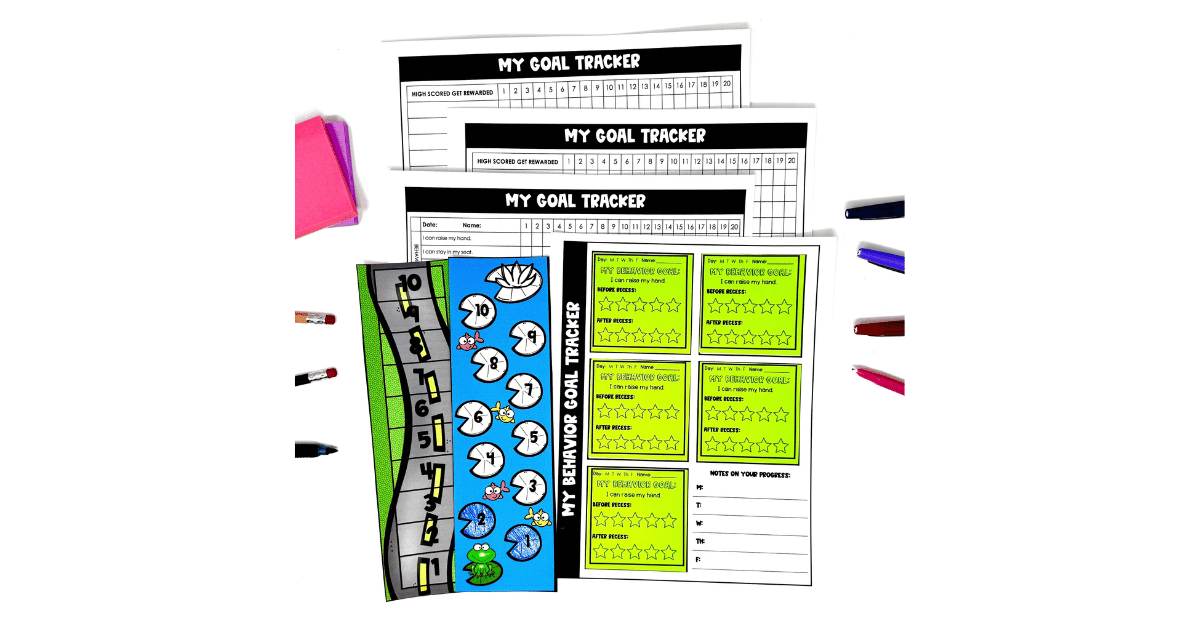
You can use this self monitoring support to help kids track their own progress with these goals too!
Task Initiation Goals
Task initiation is one of the most misunderstood executive functioning challenges. We tend to think students with ADHD are lazy or unmotivated when, in reality, their brains just struggle to transition into action-mode.
This is why it’s important to teach students how to break larger tasks into smaller steps to reduce overwhelm and increase their independence.
Goal Examples
- Given visual supports and verbal prompts, the student will begin assigned classroom tasks within 2 minutes of instruction in 4 out of 5 opportunities as measured by teacher observations.
- Given multi-step assignments, the student will independently identify the first actionable step before beginning work in 75% of opportunities.
- Given a structured daily schedule, the student will transition between activities and begin the next activity with no more than one adult support prompt in 4 out of 5 opportunities.
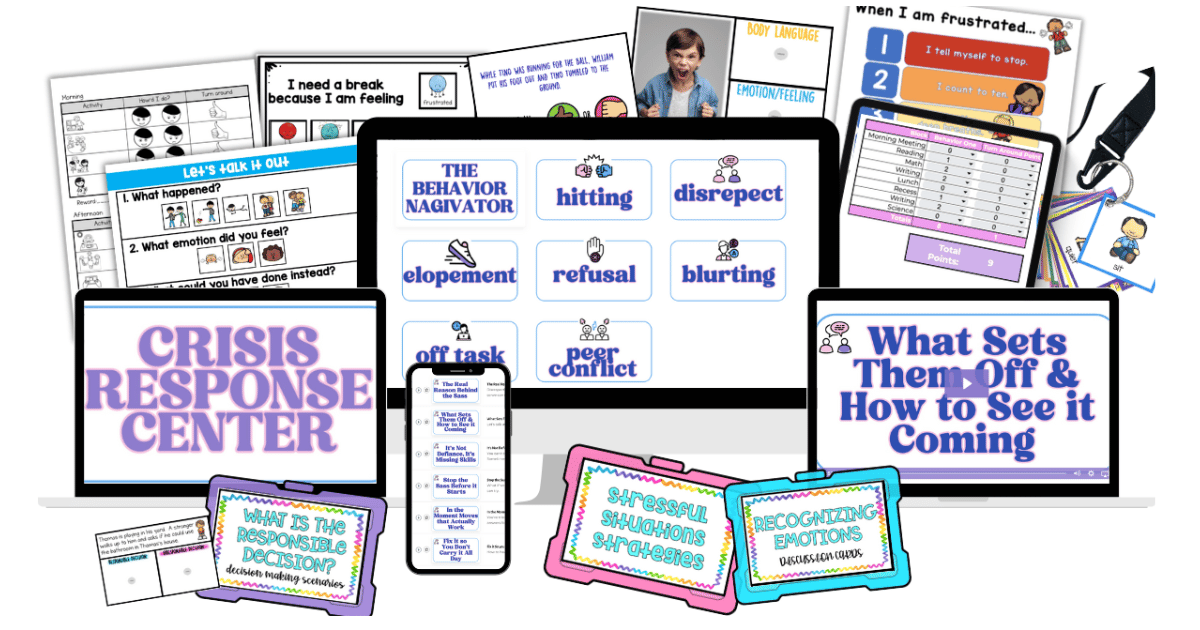
If you want to learn how to TEACH task initiation, you can join the Behavior Support Hub.
Sustained Attention Goals
Attention goals can’t expect students to maintain perfect focus all day long. We’re still dealing with kids, here! Instead, effective IEP goals should focus on helping students recognize distractions, use self-regulation skills, and re-engage with tasks when needed.
Students with ADHD often benefit from visual cues, movement breaks, visual schedule supports, and assistive technology tools that help sustain engagement over longer periods of time.
Goal Examples
- Given movement break opportunities, the student will remain engaged in independent work for 10 consecutive minutes with no more than two teacher redirections in 4 out of 5 opportunities.
- Given a self-monitoring checklist and direct instruction, the student will independently use focus strategies during classroom tasks in 80% of opportunities.
Emotional Regulation Goals
One of the most overlooked parts of ADHD is emotional regulation. A lot of teachers don’t realize that emotional regulation skills can be a struggle for students with ADHD.
Students may become overwhelmed quickly, react impulsively, or struggle to calm themselves when frustrated. These are executive functioning challenges, not personality flaws.
Students need explicit instruction in self-regulation strategies and repeated exposure and practice to coping tools.
Goal Examples
- Given direct instruction in coping strategies, the student will identify emotional states and select an appropriate regulation strategy in 4 out of 5 opportunities.
- Given frustrating classroom or peer situations, the student will use self-regulation strategies before escalation in 70% of observed opportunities.
- Given adult support when necessary, the student will return to classroom participation within 15 minutes following emotional dysregulation in 3 out of 5 opportunities.
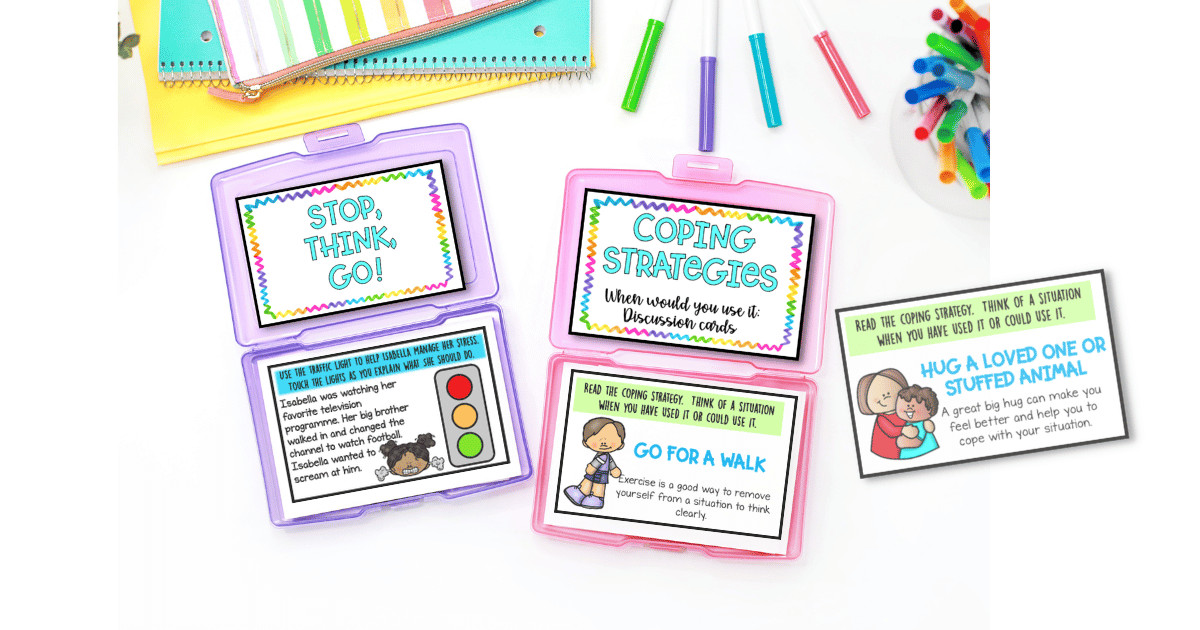
Need something to help monitor these goals and practice these skills? Check out these task boxes!
Working Memory Goals
Working memory is a huge piece of the puzzle that we don’t really pay enough attention to in the classroom. It affects a student’s ability to hold and use information at the same time.
Students might hear the directions, but lose pieces of the information before they can act on it. This can affect language skills, note taking, organization skills, and task completion.
Goal Examples
- Given verbal directions containing 3 steps, the student will accurately complete 3 step tasks in 4 out of 5 opportunities as measured through teacher observation.
- Given visual cues and graphic organizers, the student will independently follow classroom routines across the school day in 80% of opportunities.
- Given teacher instruction, the student will verbally restate directions before beginning assignments with 80% accuracy.
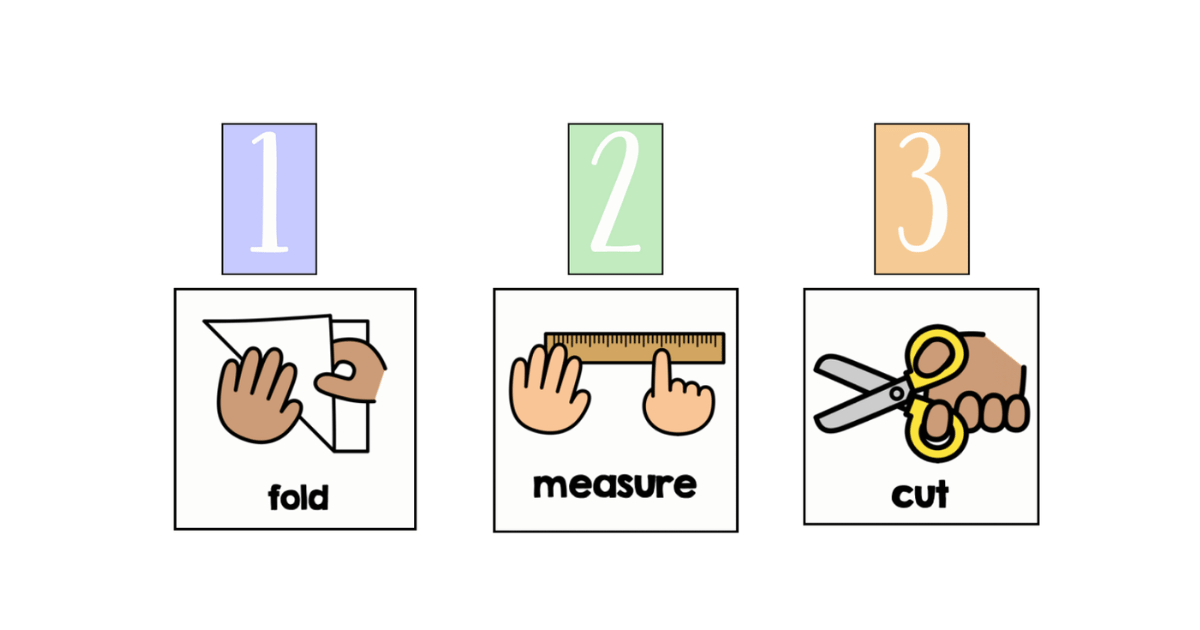
Use these visuals to help support this goal!
Time Management Goals
Time management skills are another common area where students struggle…especially middle school and high school students with ADHD.
Many students struggle to estimate the amount of time needed for assignments, pace themselves appropriately, or prioritize responsibilities independently. Even those without ADHD can have difficulties with this, so it’s not about being perfect, but we do want to review these skills as much as possible.
The goal is helping students develop systems that support long-term academic success and personal development so they can be successful in their lives outside of school.
Goal Examples
- Given visual timers and planning supports, the student will estimate the amount of time they need to complete an assignment, or a portion of an assignment, within their estimated time in 80% of opportunities.
- Given planning tools and manageable steps, the student will prioritize tasks and complete interim deadlines for larger projects in 4 out of 5 opportunities.
- Given visual reminders and teacher support, the student will independently manage transitions between classroom tasks throughout the school day in 80% of opportunities.
Executive functioning affects pretty much every part of learning. This means that academic achievement, positive social relationships, organization, and independence are all effected by these skills.
That’s why executive functioning IEP goals should focus on building really meaningful skills instead of simply controlling student behavior.
The most effective education plans will directly target the student’s unique needs and give them the ability to focus on mastering these skills in order to make learning easier.
Ultimately, students with ADHD don’t need constant reminders that they’re struggling. What they do need are systems, supports, and adults who understand how their brains work.
People who are willing to help them build the skills they need to succeed way beyond the end of the school year. I hope these tools are helpful to you as you support your students!