A Classroom Must-Have: Free First Then Board
Tell me if this sounds familiar:
You’ve found yourself repeating the same directions over and over, struggling to transition the same student from one task to another, or trying to reduce resistance during the same difficult parts of the day.
If you nodded yes to any of those scenarios, a first then board printable is probably going to become one of your favorite classroom tools.

OVERLOADED caseload? No idea how you are going to manage it all? This Summit is for you.

calling all SPED Teachers
OVERLOADED caseload? No idea how you are going to manage it all? This Summit is for you.
Now, this tool is simple, but incredibly powerful when used correctly.
A first-then board is one of those low-prep visual supports that can make a huge difference for students who need extra structure, predictability, and motivation throughout the school day.
Whether you teach in a special education setting, a general education classroom, preschool setting, middle school, or even high school, having a few first-then visuals ready to go can help students understand exactly what’s happening.
They allow students to visualize expectations, complete less preferred tasks, and move more successfully through their day by giving them a visual anchor they can rely on.
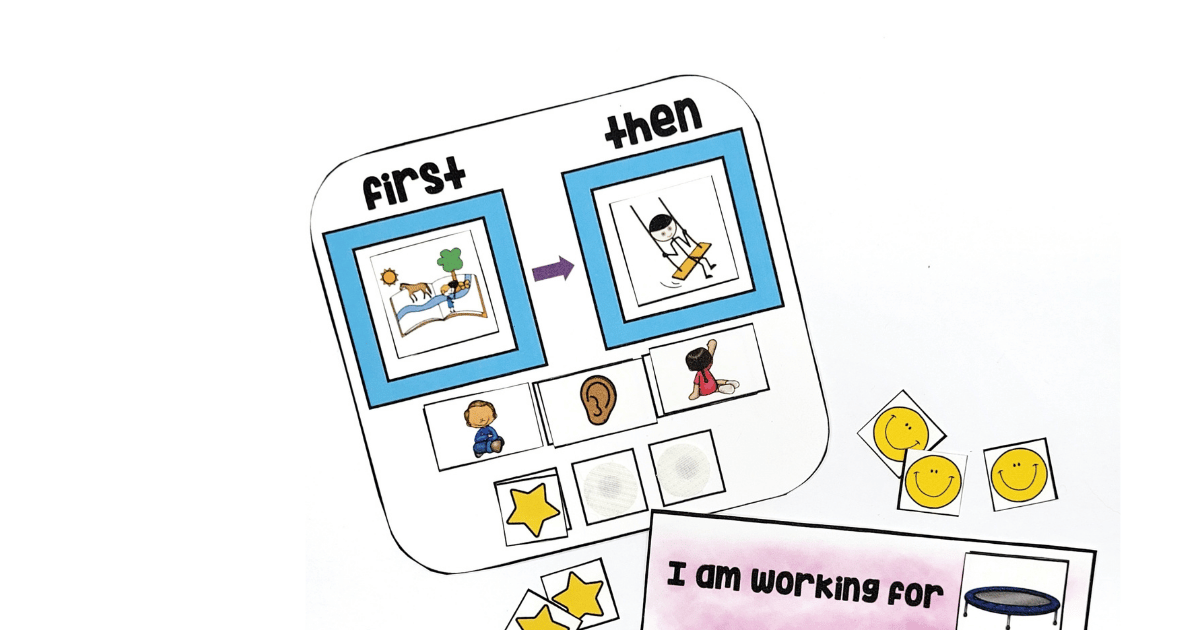
In the following blog post, we’ll take a closer look at what they are, why they work so well, and how you can use them effectively in your classroom. Plus, I’m also giving you one for free, so make sure you grab it!
What Is a First Then Board?
A first-then board is a super simple visual behavior resource that shows a student:
- First, the task they need to complete
- Then, what happens afterward
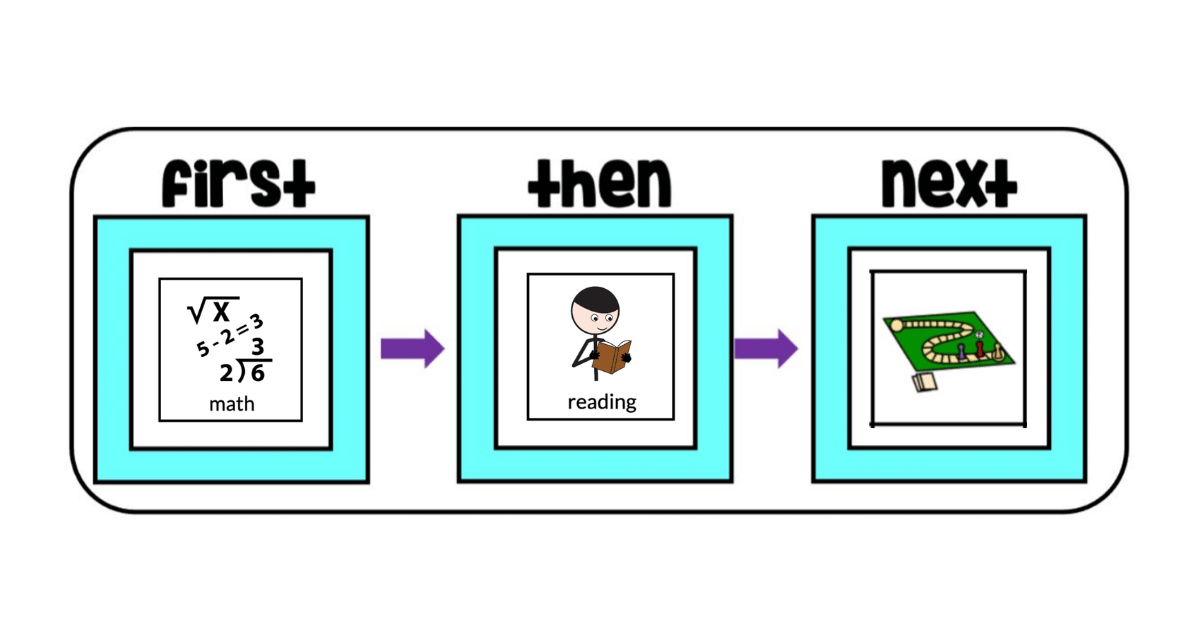
We generally use these boards to show the non-preferred task first, such as a worksheet that need to be completed. Then, we would show the next step which is typically a reinforcer of some kind.
Here’s an example:
First work: Complete math worksheet
Then: Choose a game
The concept comes from behavioral principles often used to encourage a behavior that we’re trying to elicit more of (engagement/work completion in the above example) by pairing it with a highly motivating activity.
Students can clearly see:
- What they need to do now
- What comes next
- What they are working toward
Instead of relying solely on verbal directions which can be glossed over or ignored, the student has a concrete visual tool they can reference independently.
Why First Then Boards Work So Well
A lot of your students may struggle with transitions, waiting, task completion, and understanding abstract language. A first-then board makes those expectations visible.
So instead of hearing, “Finish your work and then we’ll do something fun.”
Students can actually see exactly what that means. This reduces uncertainty and provides valuable visual cues that support independence. So, you’re not constantly repeating yourself! Bonus, when you make the expectations clear that the reinforcement comes after the work- it isn’t bribery, it is true reinforcement (which is changing the behavior in the future).
For many learners, seeing information is much more effective than just hearing it.
This is especially true for students with:
- Autism spectrum disorder
- ADHD
- Language delays
- Executive functioning challenges
- Anxiety
- Cognitive disabilities
- Communication differences
- Other special needs
Because expectations are clear and predictable, first-then boards tend to reduce frustration and difficult behavior before it begins!
Who Benefits Most from First Then Boards?
Many students with autism spectrum disorder thrive with predictable routines and visual information. But, while first-then boards are commonly associated as a support for autistic students, they can benefit many different learners.
A first-then board helps break down expectations into manageable steps while reducing anxiety about what comes next. These tools can be used for students in different situations and with differing needs.

Students Learning New Routines
When introducing classroom procedures, expectations, activity schedules, or independent work expectations, first-then boards provide clear structure.
Students Who Resist Non-Preferred Tasks
If a student frequently avoids work, having a visible reminder of the upcoming preferred activity can increase motivation. Students are more likely to do what they don’t want to do if they know they get something they do want soon.
Students Receiving Related Services
Service providers in occupational therapy, physical therapy, speech therapy, and counseling, often use first-then boards to structure their sessions and support transitions between activities.
Students Working on School Readiness Skills
Young students developing school readiness social skills often benefit from visuals that help them understand routines and expectations.
There’s really no situation in the school environment that can’t be a great scenario for a first-then board.
Ways to Use a First Then Board in the Classroom
One of the best things about a first-then board is its flexibility. You can use it throughout the day in basically every subject area.
Academic Tasks
- First reading, then centers
- First writing, then computer time
- First math, then movement break
Specials
- Physical education
- Music
- Art
Many students benefit from visual reminders during transitions to and from specials.
Content Areas
Use first-then boards during:
- Reading
- Math
- Science
- Social studies
Older Students….Don’t assume these visuals are only for young children!
Students in middle school, high school, and even higher education settings may benefit from visual task breakdowns when executive functioning challenges arise. They truly are a flexible tool that can be used for many learners.
What Should You Put on a First Then Board?
There are many different types of first-then boards.
You can create them using:
- Written words
- Photos
- Symbols
- Icons
- Picture cards
- Visual schedule cards
Some teachers create their own cards while another may decide to use pre-made visuals.
Lots of special education teachers laminate these materials and use velcro so activities can easily be changed out throughout the day.
Here are some options you can use depending on where you’re studetns are and what they need.
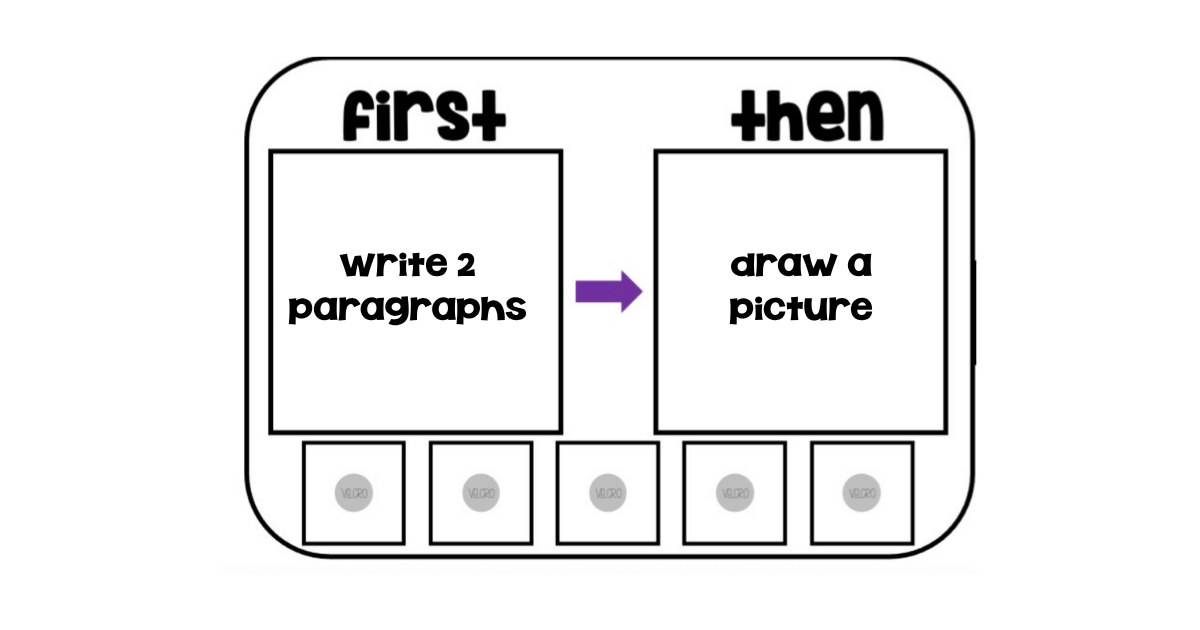
Text Only
Perfect for readers.
First: Complete assignment
Then: Free choice
Picture-Based
Probably the most common. This is ideal for non-readers or students with communication challenges.
A set of pictures can represent both the first and second activity.
Color-Coded Systems
Some teachers like adding color options to increase visual clarity and make it easier to show where students are in their schedule.
Using First Then Boards with Other Visual Supports
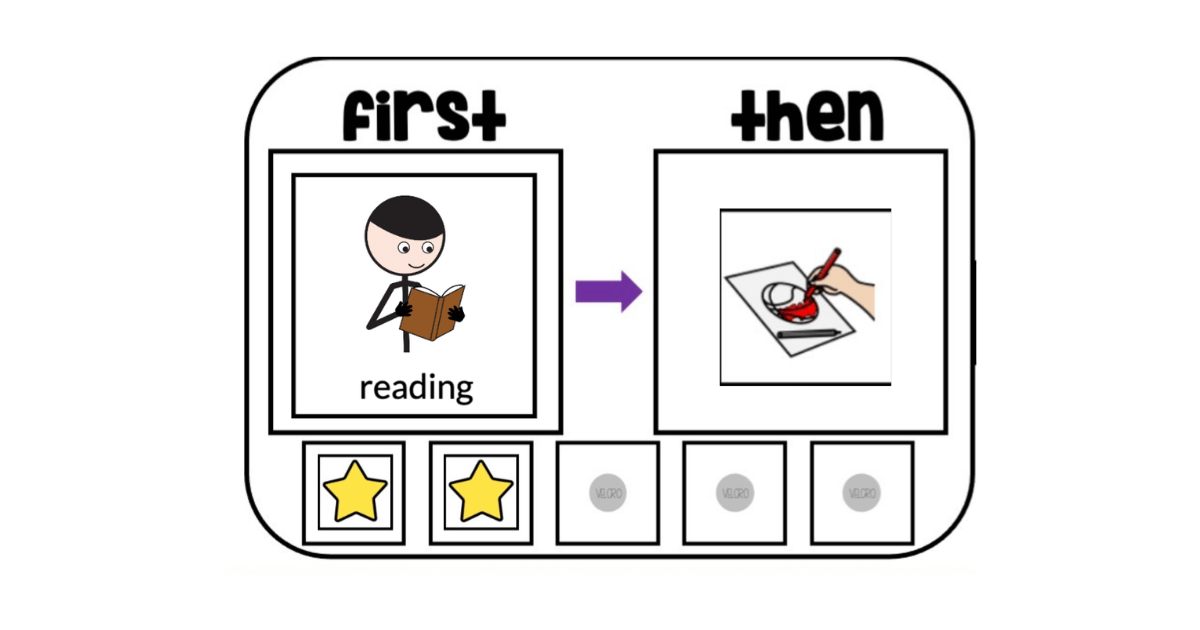
A first-then board works even better when paired with additional supports. This one tool can be used to support other existing tools in your classroom like a visual schedule, token board, choice board, etc.
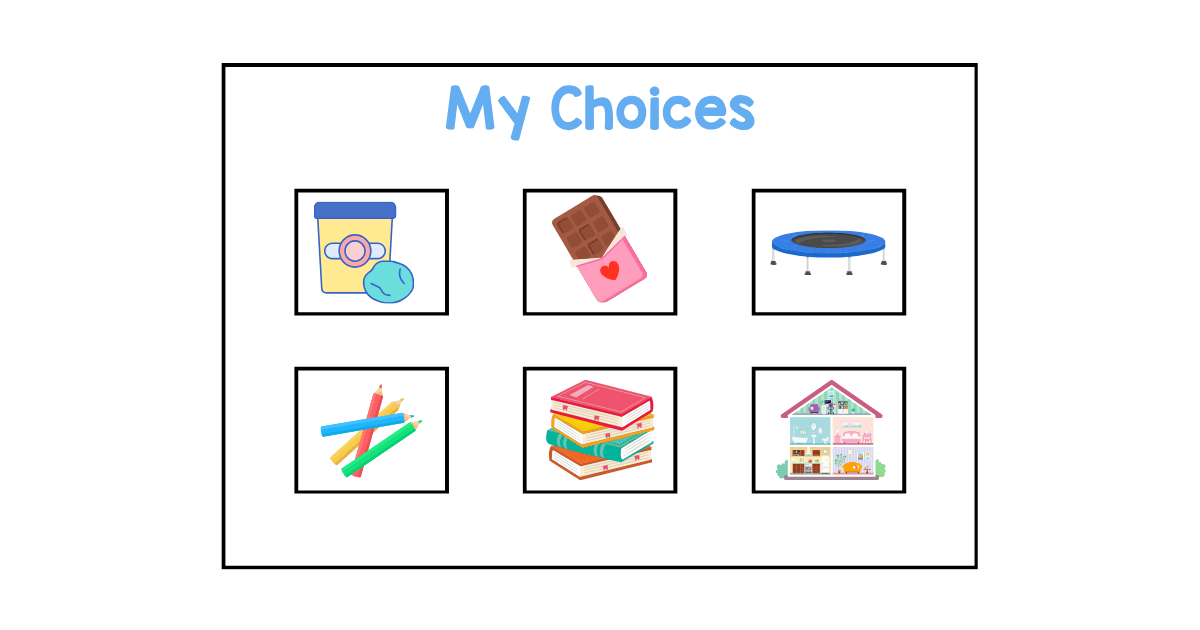
The goal of these resources is to make things easier for both you and the student. If a child is already using a token board, it may be helpful to layer in the first-then board to give them more clarity on what’s next.
Together, these tools should create a highly supportive learning environment that allows you to quickly and effectively support students.
What If the First Then Board Stops Working?
There’s always going to be tweaks and adjustments along the way with any behavior resource or plan. You may find yourself thinking that it was working and suddenly it doesn’t seem to be doing the trick anymore.
This is completely normal.
When a first-then board loses effectiveness, consider these questions first before scrapping the entire system:
- Is the reinforcer still motivating?
- Is the first task too difficult?
- Are expectations clear?
- Are you still using it consistently?
You may need to change the reward, switch up the fun, realign expectations for the first task, ask the student if their interests have changed, or track how often you’re actually using the tool versus how often you think you are.
Yes, tools can stop working. But, there’s always a reason. Hopefully, your students will reduce the need for these tools and begin to learn how to perform the tasks without a board. But, there are always things we can reflect on and update as we go to ensure our resources stay supportive.
Creating Your Own First Then Board
You don’t need fancy software to create a first-then board. In fact, you really only need paper and a pen or a whiteboard. But, if you want to create something a little nicer, here are some optional materials:
- Printed templates
- Laminated visuals
- Sticky notes
- Velcro systems
- Digital formats
Some educators create a visual editable PowerPoint version for easy customization, while others incorporate classroom images, custom graphics, or photos of actual classroom activities.
It doesn’t have to be perfect to be effective. It just has to be used!
Why Every Classroom Should Have a First Then Board Ready
A first-then board is one of the simplest classroom supports you can implement. You don’t need training and you don’t need to buy anything.
These boards require minimal prep time but can have a major impact on:
- Task completion
- Independence
- Transitions
- Communication
- Student confidence
- Reduced frustration
- Reduced problem behavior
Because they aren’t grade specific, they can be adapted for any age group and setting.
Whether you’re supporting a student with special needs, implementing lesson plans that require multiple transitions, or simply looking for a more effective way to communicate expectations, a first-then board belongs in your toolbox.
It’s a small support that truly creates big results.
Grab Your Free First Then Board Printable
Ready to start using this powerful visual support in your classroom?
I’ve created a free first then board printable that you can download, print, laminate (optional), and use immediately with your students.
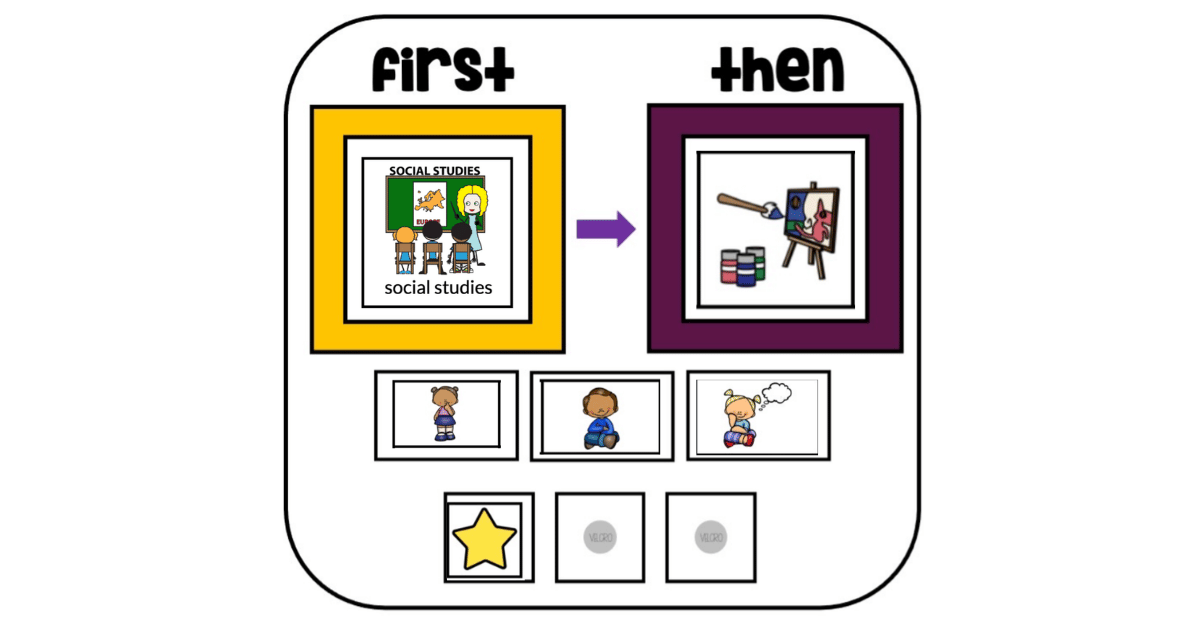
Whether you’re building a complete system of visual supports, pairing it with token boards, or adding it to existing activity schedules, this free resource will help you get started quickly.
Download your free First Then Board and get 19 other Token Board Printables with it!
I wanted to make sure it was incredibly simple for you to grab these resources and start implementing them in your classroom today.
Remember, behavior supports don’t always have to be complicated. In fact, when we overcomplicated things, it tends to make a bad situation, worse. When we go back to basics, give students what they need, and make sure to give teachers the same, we make a bigger impact.
A first-then board may sound simple, but don’t let that fool you. These small but mighty resources are ready to completely change your classroom. Grab the pack of resources for free here and print them off. Keep them in your classroom for any student that may need them!
You never know who is going to need a tool someday, so it’s always good to be prepared. I hope this blog post was helpful. Thank you so much for reading!