Description
Do your students struggle to be honest when telling the truth feels hard?
Whether they’ve made a mistake, broken a rule, or hurt someone’s feelings, telling the truth can feel hard in the moment.
The good news? Honesty is a skill that can be taught, learned, and practiced so students know how to tell the truth, even when it’s difficult, instead of hiding what happened or making excuses.
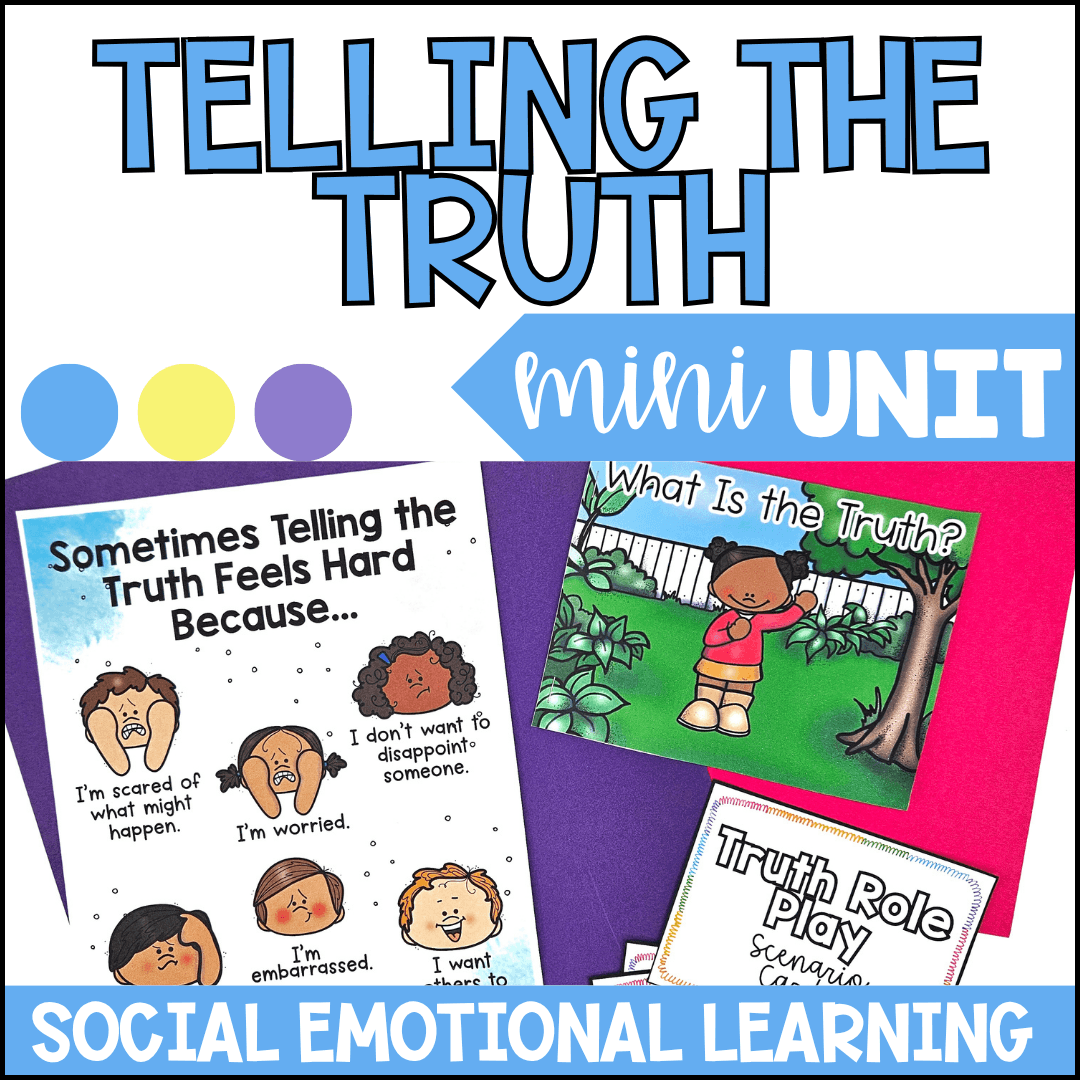
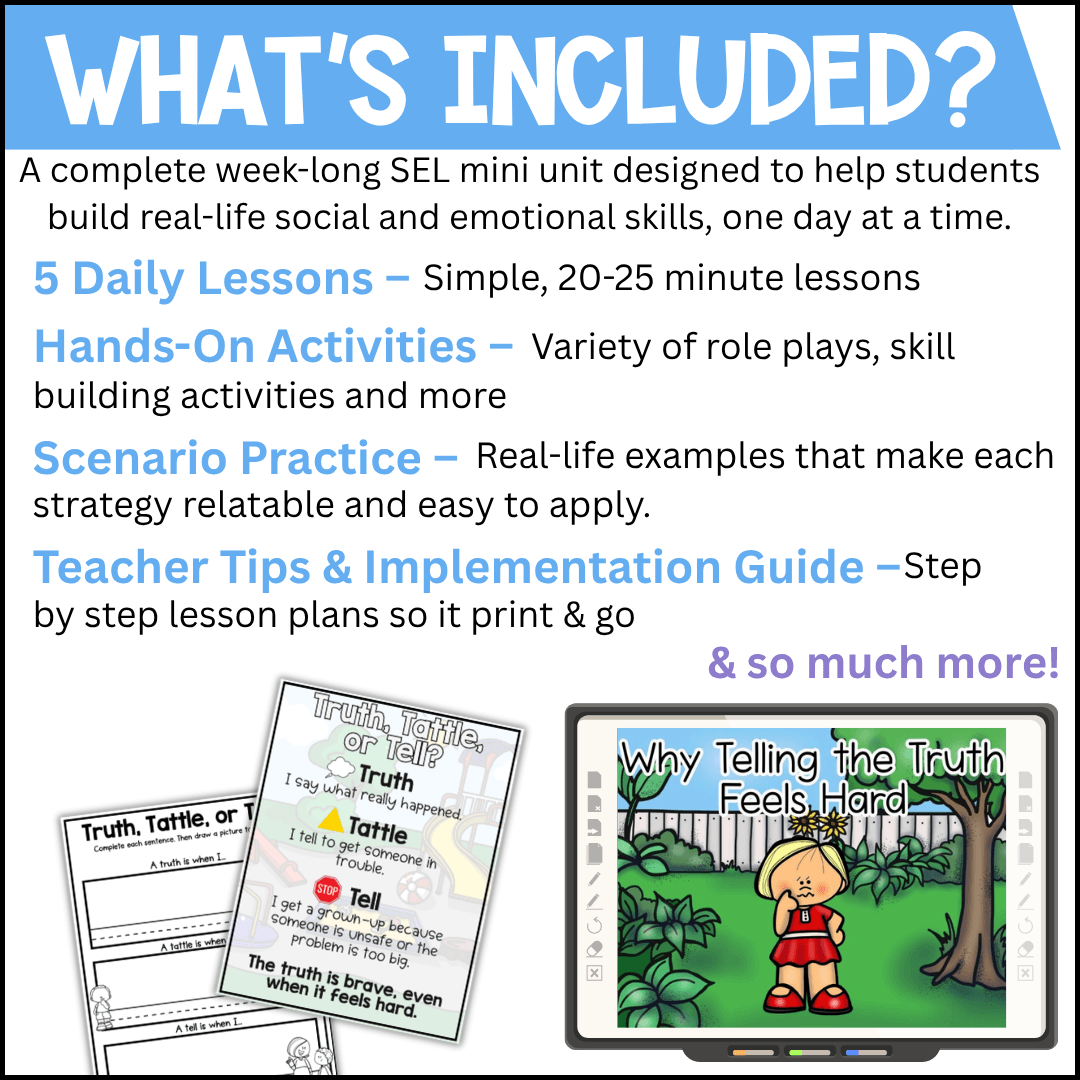
This Telling the Truth Mini Unit is a week-long unit that helps your students understand what honesty means, why telling the truth matters, and how honest choices build trust, solve problems, and repair relationships.
Telling the Truth Mini Unit Outline
DAY ONE: What is the Truth?
- Discussion about what telling the truth means and how to recognize truthful and untruthful responses
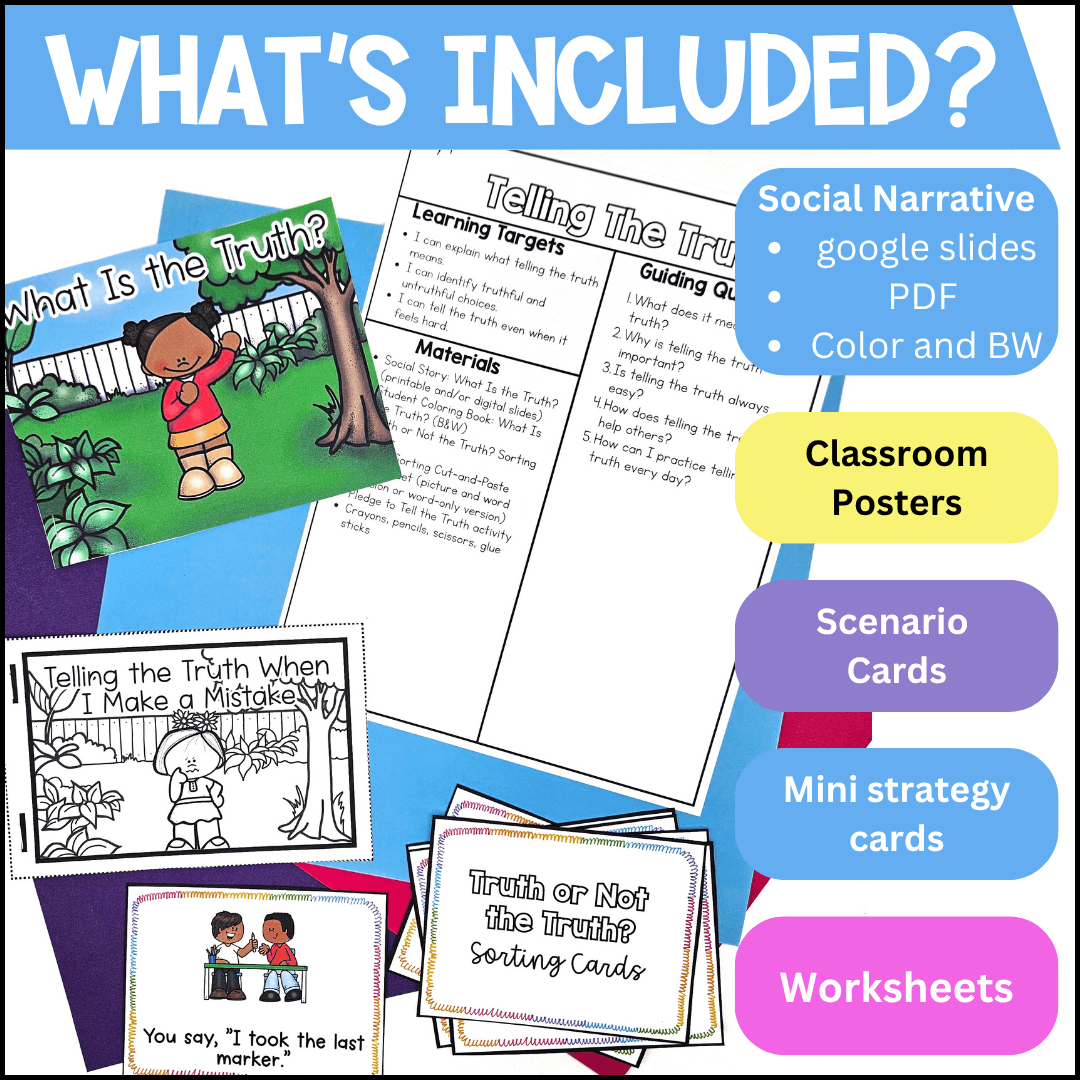
- Social narrative about what telling the truth actually means (includes Google slides, color PDF, and BW take home story)
- Pledge to Tell the Truth Worksheet that students can sign
- Activity to sort the ways we tell the truth or do not tell the truth
- Cut and paste worksheet where students can sort pictures that show telling the truth and not telling the truth
DAY TWO: Why Telling the Truth Feels Hard
- Review and discussion about why telling the truth can feel difficult if they are embarrassed, scared or worried about getting in trouble.
- Social narrative about why telling the truth feels hard (incudes Google slides, color PDF, and BW take home story)
- Classroom posters
- Worksheet to write or draw about telling the truth even when they feel it is difficult
- Scenario card activity with feeling response cards to help facilitate a discussion about how big feelings can make telling the truth feel difficult
DAY THREE: Telling the Truth When I Make a Mistake
- Review and discussion about how everyone makes mistakes and it is important to take responsibility and make things right
- Social narrative about telling the truth when we make a mistake (incudes Google slides, color PDF, and BW take home story)
- Truth role play game where students can practice truthful responses
- Worksheet to write or draw a picture of yourself telling the truth
DAY FOUR: Truth, Tattle or Tell
- Review and discussion of the difference between telling the truth, tattling and telling a trusted adult when someone needs help or is unsafe
- Classroom posters
- Truth, Tattle or Tell sorting cards activity
- Pocket chart sorting activity
DAY FIVE: When a Lie Gets Bigger
- Review and discussion about how one small lie can grow into a much bigger problem when we don’t tell the truth
- How to Shrink a Snowball classroom poster
- “When a Lie Gets Bigger” story to read aloud with discussion questions
- Cut and paste flip chart activity about what happens if we keep a lie going
- Certificate for completion
Each day comes with a detailed lesson plan with learning targets, guiding questions, and step by step instructions.
This is a ZIP file that includes Google slides and PDFs.
Want more mini units like this one? Check out these below:
How to get TPT credit to use on future purchases:
• Please go to your My Purchases page (you may need to login). Beside each purchase you will see a Provide Feedback button. Simply click it and you will be taken to a page where you can give a quick rating and leave a short comment for the product. Each time you give feedback, TPT gives you feedback credits that you use to lower the cost of your future purchases. I value your feedback greatly as it helps me determine which products are most valuable for your classroom so I can create more for you. ☺